
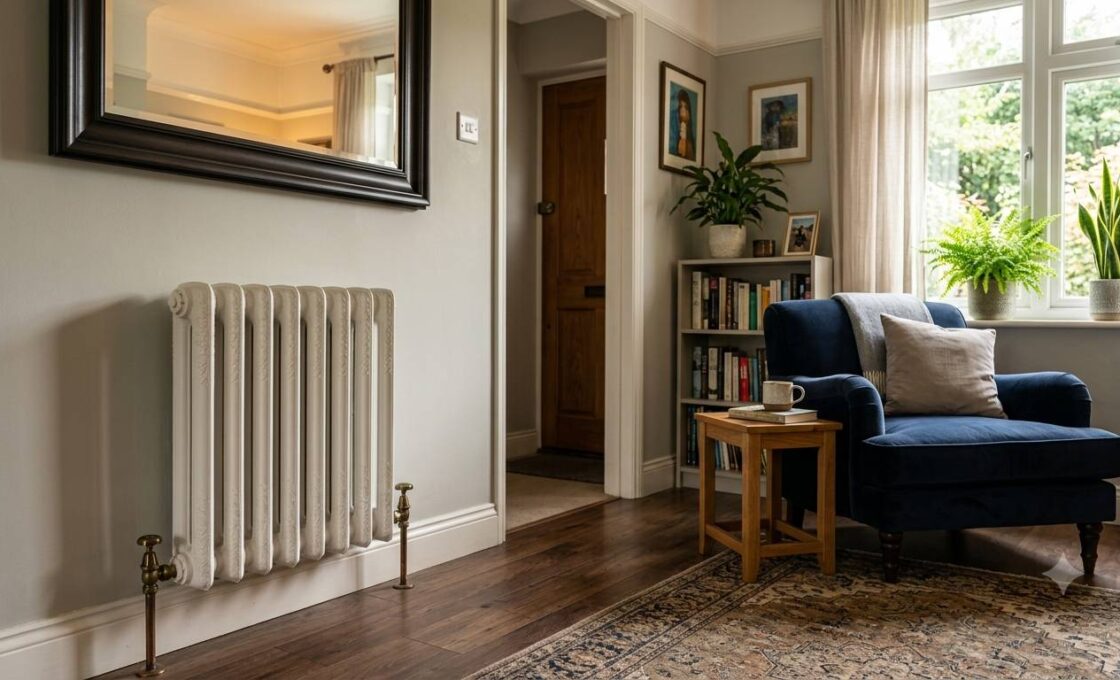
Choosing the right radiator involves more than selecting a style that suits your décor. Heat output, room size, wall space, pipework, finish, and placement all matter. A well-chosen column radiator can provide dependable warmth while adding character to a living room or making a narrow hallway feel considered and welcoming.
A radiator in a living room or hallway needs to do two jobs well: warm the space effectively and sit comfortably within the interior. A 3 column radiator can meet both needs, offering a traditional profile with strong heat output and a choice of sizes, orientations, and finishes. However, appearance should never be the only deciding factor. Room dimensions, insulation, glazing, available wall space, and existing pipe positions can all affect suitability. Before buying, it is worth understanding how column depth, radiator height, heat requirements, installation conditions, and everyday use influence performance, comfort, and the final look of the room.
Begin With the Room’s Heat Requirement
The most important consideration is how much heat the room needs. Radiator output is usually shown in British Thermal Units, known as BTUs, or in watts. A large living room with external walls and wide windows will normally lose more heat than a compact internal hallway. Ceiling height, insulation, glazing, doors, and room position also affect the calculation.
Use a heat loss or radiator size calculator instead of choosing by appearance alone. Measure the room’s length, width, and height carefully. A radiator with insufficient output may leave the space uncomfortable, while an oversized model can occupy more wall area than necessary.
Understand the Three-Column Design
A column radiator is formed from repeated sections through which heated water circulates. A three-column model has greater depth and surface area than a two-column design of similar height and length. The extra surface area can support stronger heat output without always requiring a much wider radiator.
That added depth matters in narrow spaces. A living room may accommodate the fuller profile easily, but a hallway could feel restricted if the projection is not checked. Review the total distance from the wall, including brackets, valves, and pipe connections.
Measure the Wall and Surrounding Space
Measure the proposed location before selecting a radiator. Record the available height and width, then note skirting boards, sockets, switches, door frames, pipework, and nearby furniture. Enough clearance should remain for fitting, valve adjustment, cleaning, and warm air movement.
Hallways require particular care because doors may open towards the radiator and the walking route must stay clear. In living rooms, sofas, cabinets, curtains, and media units can obstruct heat. Marking the approximate size on the wall can help you judge whether it will look balanced. Careful planning also reduces the chance of needing costly changes after the radiator arrives.
Choose the Right Orientation
Horizontal column radiators work well across broader wall areas and can often sit beneath windows. Their shape may complement fireplaces, shelves, and other horizontal features in a living room while providing substantial heat output.
Vertical designs make better use of height where wall width is limited. This can help in narrow hallways or living rooms with awkward layouts. However, a taller radiator is not automatically suitable for a larger room. Its stated output must still match the calculated requirement.
Balance Heat Output With Physical Size
Style and performance must come together before a final choice is made. A 3 column radiator benefits from increased surface area, but its exact output still depends on height, length, number of sections, and operating conditions. Similar-looking models can therefore provide different levels of warmth.
Read the technical specifications and compare the figures with the room calculation. Where wall width is limited, a taller model may help. Where height is restricted, a longer horizontal design may be more suitable. Seek professional advice when available space and heating demand are difficult to match.
Consider Position and Heat Distribution
Radiator position influences how evenly warmth spreads through the room. Areas beneath windows and on external walls have traditionally been used to counter cooler air. Better insulation and modern glazing may allow more flexibility, but the radiator still needs open space around it.
Avoid placing a large sofa, heavy curtains, storage unit, or decorative cover directly in front of the radiator. In a hallway, make sure coats and bags will not rest against it. The best location should support heat distribution, safe movement, cleaning, and valve access.
Check the Heating System and Pipework
Traditional column radiators are commonly connected to wet central heating systems, so the boiler, pipework, valves, and water circulation must be suitable. Existing pipe positions may influence the radiator width and valve arrangement. Moving pipework can improve placement, but it may increase installation work and cost.
Sludge, corrosion deposits, trapped air, or poor balancing can reduce the performance of a new radiator. If existing radiators heat unevenly or contain persistent cold areas, the system may need attention before installation. Correct balancing afterwards helps distribute hot water more evenly.
Select a Finish That Complements the Room
Column radiators can become a deliberate design feature rather than something to hide. White offers a flexible option, while black, anthracite, metallic, neutral, or brighter shades can create a stronger focal point. The finish should work with walls, flooring, doors, furniture, and nearby fittings.
Consider how the colour will appear in natural and artificial light. A hallway may benefit from a practical finish that does not show marks easily, while a living room may allow a bolder choice. Made-to-order colours can involve different costs or delivery arrangements.
Plan for Valves, Installation, and Maintenance
Valves affect both control and appearance. Thermostatic radiator valves allow room temperature adjustment, while coordinated finishes create a neater result. The type and orientation must match the pipe position and radiator connections.
Secure installation is essential because column radiators can be heavy when filled with water. Suitable fixings, correct brackets, leak-free connections, and system balancing support safe operation. Professional fitting is advisable when pipework needs alteration or wall strength is uncertain.
Dust can gather between the columns, especially in hallways. Clean the radiator with a soft cloth, suitable brush, or gentle vacuum attachment, and avoid abrasive products. Bleeding trapped air and checking valves can help preserve efficient performance. Keeping the surrounding area clear also supports airflow and makes routine inspection easier.
Conclusion
Buying a column radiator for a living room or hallway requires careful attention to heating performance, physical dimensions, placement, and interior style. Start with an accurate heat requirement, then compare output, height, width, depth, and total wall projection. Consider doors, furniture, curtains, walking space, pipe positions, valves, and the condition of the central heating system before ordering. Horizontal models can suit broad wall areas, while vertical designs may work better where width is limited. Colour adds character, but it should never take priority over correct sizing and reliable installation. Professional guidance is valuable when calculations, wall strength, or pipe alterations are uncertain. By measuring thoroughly and reviewing the technical details, you can choose a 3 column radiator that provides dependable warmth, fits the available space, complements the room, and continues to perform efficiently for years without creating avoidable installation or comfort problems.