
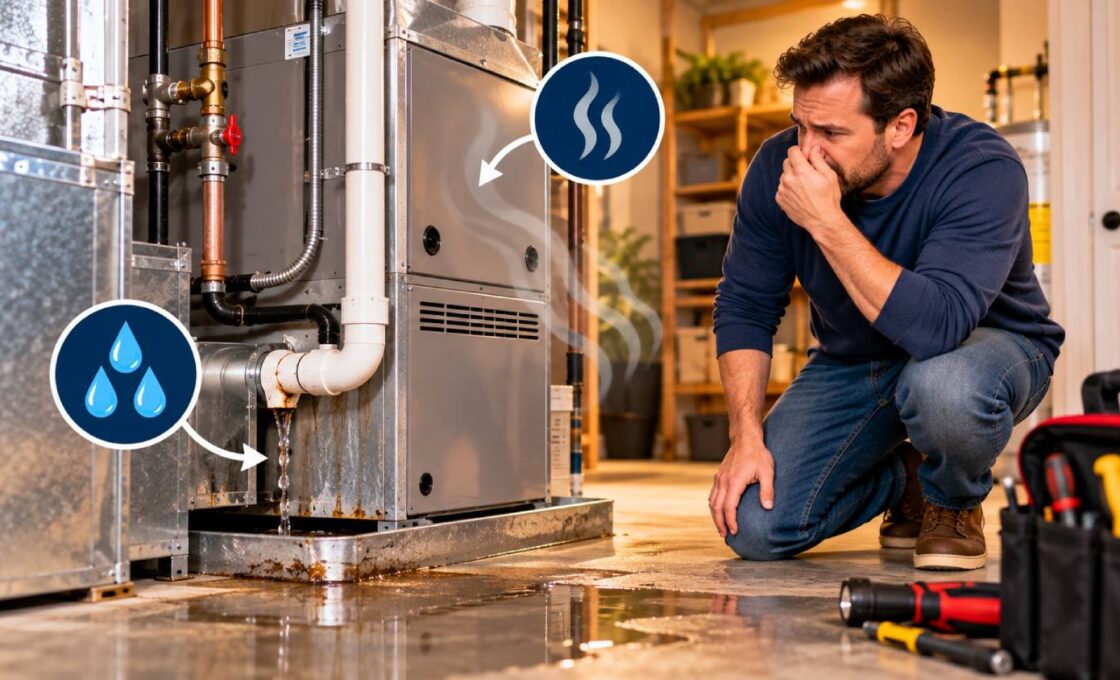
A heating system that starts leaking water or producing unusual odors can quickly turn from a minor annoyance into a real concern for comfort and safety. These signs often appear during the first cold stretch of the season or after years of steady use, when components wear down or dirt builds up.
When you notice water pooling near the unit or catch a scent that does not belong, timely attention matters. Many homeowners in the area turn to experienced providers for heating repair in Colorado Springs, CO to identify the source and restore reliable performance before small issues grow larger.
Common Causes of Leaks in Heating Systems
Leaks usually stem from a few predictable sources. Condensate lines can clog with algae or debris, causing water to back up and drip from the furnace or air handler. A cracked heat exchanger may allow moisture to escape, while loose fittings or aging seals on boilers and hydronic systems can release water around the base of the unit.
In some cases, the problem is not the heating equipment itself but nearby plumbing that feeds the system. Over time, vibration, temperature swings, and mineral deposits weaken joints. Checking the area around the unit for wet spots, rust stains, or white residue helps narrow the location. If the leak is active, shutting off power to the system and containing the water limits secondary damage to floors or walls.
Understanding Unusual Smells From Your Heater
Odors from a heating system range from harmless to urgent. A light dusty or burning smell that appears the first time heat runs in the fall is often normal. Dust that settled on the heat exchanger or elements during warmer months burns off quickly and should fade within an hour or two.
Other smells deserve closer attention. A musty or moldy odor points to moisture buildup inside ducts, on the evaporator coil, or in a drain pan. Persistent burning plastic, electrical, or metallic scents can signal overheating wiring, a failing motor, or debris near a heat source. The most serious is a rotten-egg or sulfur smell, which utility companies add to natural gas so leaks are easier to detect. In that case, leave the home, avoid switches or flames, and contact the gas utility right away.
A chemical or exhaust-like odor may indicate incomplete combustion or a problem with venting. Any smell that grows stronger, returns after the system runs for a while, or comes with headaches or dizziness warrants immediate professional evaluation.
Practical Steps When You Notice a Problem
Homeowners can take a few safe actions before calling for help. Start by checking the air filter. A clogged filter restricts airflow and can contribute to overheating or musty air. Replace it if it looks dirty. Look for obvious water around the unit and clear any visible debris from vents or the area near the equipment.
If the system is still running and the issue is not a gas odor, turn the thermostat off and switch off power at the breaker. This stops further water damage or electrical stress. Note when the problem began, whether it happens only at startup, and any other symptoms such as unusual noises or uneven heating. That information helps a technician diagnose the issue faster.
Avoid trying to open sealed panels, tighten gas fittings, or clean internal parts yourself. Heating systems involve combustion, electricity, and pressurized components that require proper tools and training.
When Professional Service Is the Right Choice
Some situations call for skilled inspection right away. Active water leaks that continue after power is off, any gas-related odor, persistent burning or electrical smells, and systems that cycle on and off without producing heat all benefit from prompt attention. Age also matters. Equipment past its expected service life is more likely to develop cracks, worn seals, or failing motors.
A qualified technician can test for carbon monoxide, inspect the heat exchanger, check combustion performance, clear condensate lines, and verify that electrical connections are sound. Regular seasonal maintenance often prevents these problems by catching wear early and keeping airflow clean.
Factors That Influence Repair Decisions
Several practical considerations shape the next step:
- Safety risks such as gas leaks or carbon monoxide potential take priority over cost or convenience.
- The age and overall condition of the system help determine whether a targeted repair or broader service makes more sense.
- Frequency of recent issues can indicate deeper wear rather than an isolated fault.
- Local climate demands, including cold snaps and dry air that stress components, affect how long repairs last.
- Access to licensed, insured technicians familiar with furnaces, boilers, and ductless systems ensures the work meets safety standards.
Final Considerations
Leaks and strange smells from a heating system are signals worth noticing. Dust-related odors at the start of the season are often temporary, while water leaks, musty air, electrical scents, or gas odors point to issues that need prompt attention for safety and reliable heat.
Stay alert to changes in how the system looks, smells, and performs. Simple checks like filter changes and powering down the unit help in the moment, but a trained technician provides the accurate diagnosis and lasting fix that keeps the home comfortable through the colder months.