
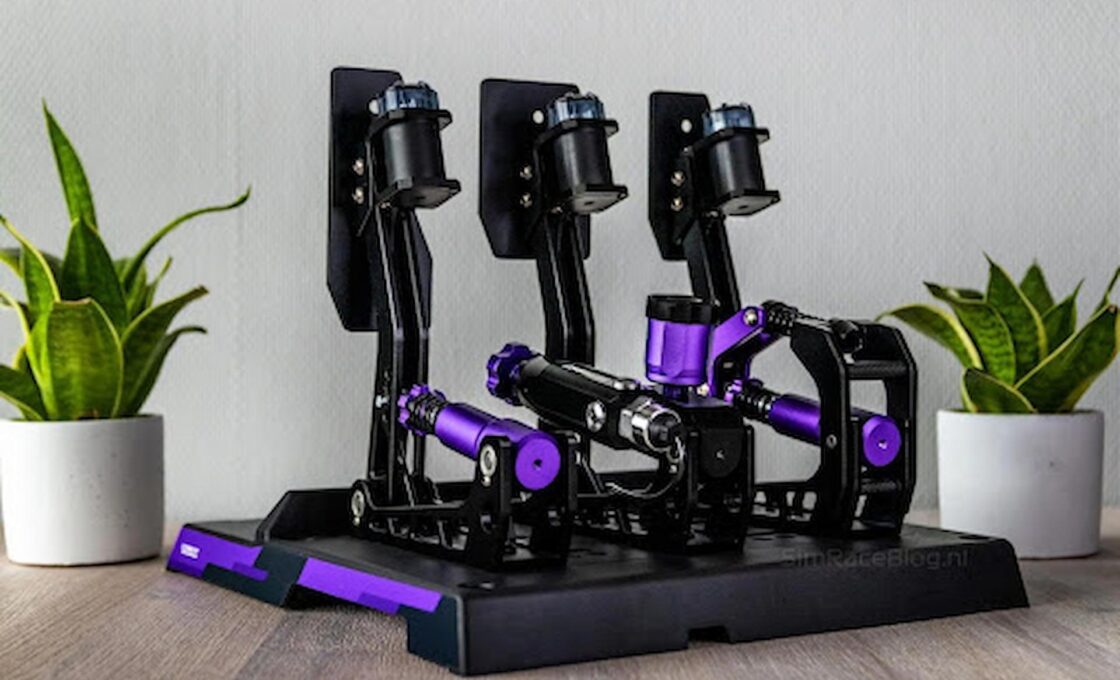
Sim racing demands precision, control, and consistency — and none of that happens without the right pedal system beneath your feet. High-quality pedals are the hidden advantage that separates casual drivers from genuinely competitive racers. Learn why pedal quality shapes every lap, every corner, and every victory.
Sim racing has evolved far beyond a casual gaming hobby. Today’s competitive setups replicate real motorsport dynamics with stunning accuracy, and a major part of that realism depends on pedal performance. Among advanced hardware options, Conspit pedals have become a frequently discussed choice for serious racers looking for more feel, control, and competitive confidence. Pedals are not just accessories; they are the primary tools for speed management, braking stability, and race-winning precision.
Whether your goal is shaving milliseconds off lap times or improving consistency over long endurance sessions, the pedals you choose directly influence your results. A high-quality pedal set can transform driving smoothness, increase precision, and dramatically improve race control.
The Critical Role of Pedals in Sim Racing Performance
Pedals determine how your car responds to acceleration, braking, and balance. When pedal input is vague or inconsistent, every turn becomes unpredictable. Budget pedal sets often rely on basic springs that feel spongy and lack feedback, making it difficult to manage braking pressure or throttle application with accuracy.
Advanced pedal sets, including Conspit pedals, typically use load-cell or hydraulic systems designed to mimic real racing brake systems. Instead of measuring pedal travel, load-cell technology measures the pressure applied, helping racers learn proper braking technique based on force rather than position. This results in:
- More realistic feedback
- Better muscle-memory development
- Greater consistency over multiple laps
A driver’s speed heavily depends on braking performance. In motorsport, roughly 70% of lap time gains come from braking improvements, not throttle speed. That means pedal precision can be the difference between a smooth apex and a lost race.
Understanding Pedal Technology — What Sets Premium Pedals Apart
Load-Cell vs Traditional Pedals
Traditional pedals detect physical distance, but racing demands pressure-based control. Load-cell pedals simulate real braking mechanics and allow far more accurate inputs.
| Feature | Traditional Spring Pedals | Load-Cell or Hydraulic Pedals |
| Input Type | Travel distance | Pressure force |
| Realism | Low | Very high |
| Fine-control ability | Limited | Excellent |
| Consistency | Varies with fatigue | Stable & repeatable |
Stronger Build Quality
High-quality pedal systems are made from durable metals and industrial-grade components. This ensures they withstand thousands of pressure cycles without losing sensitivity — essential for competitive racing.
Adjustability for Custom Driving Feel
Advanced pedals allow fine-tuning based on preference:
- Pedal angle adjustments
- Custom resistance and stiffness
- Software-based sensitivity mapping
- Progressive braking feel
This flexibility makes it easier to develop a consistent driving rhythm.
How Pedal Quality Shapes Race Results
Pedals influence three major areas that directly affect racing outcomes:
- Braking Control
Improper braking results in overshooting corners, tyre lockups, or unstable corner entries. A solid pedal system provides progressive braking force and clearer feedback so drivers stop exactly where they intend.
- Throttle Precision
Maintaining grip through corner exits relies on smooth acceleration, not aggressive pedal stabbing. High-quality pedals allow subtle modulation, reducing wheelspin and improving traction efficiency.
- Consistency Over Time
In racing, precision must be repeatable. Cheap pedals often change feel as springs soften or sensors degrade. Load-cell systems preserve accuracy session after session, supporting long-term improvement.
Key Benefits of Upgrading Your Sim Racing Pedal Set
- Better lap time stability
- Improved braking confidence
- More realistic driving experience
- Enhanced control under pressure
- Increased race discipline and technique development
Research suggests that sim racers who invest in load-cell pedals experience faster skill improvement compared to those using entry-level hardware, because muscle memory forms faster when feedback is accurate and reliable.
How to Choose the Right Pedals — Practical Tips
Selecting pedals should be based on performance needs, not appearance or price alone. Consider these factors when upgrading:
- Brake System Type
Prioritise load-cell or hydraulic brakes for realistic feel and fine pressure control. - Adjustability Range
Look for pedal sets offering tuning options for tension, angle, and spacing. - Build Material
Metal construction ensures long-term durability and resistance to wear. - Footplate & Ergonomic Design
Comfort keeps fatigue low and consistency high during endurance driving. - Software Calibration Features
Profiles allow optimisation for different racing styles and cars.
Actionable Takeaways for Sim Racers
Use these practical steps to optimise your driving performance:
- Upgrade to a load-cell brake system for realistic braking pressure.
- Adjust pedal resistance to match real car behaviour and personal preference.
- Use pedal calibration tools to set maximum and minimum pressure for consistency.
- Train braking muscle memory by performing repeated controlled braking drills.
- Reevaluate your hardware periodically as your skill improves.
Are High-Quality Pedals Worth the Investment?
If your goal is to enjoy driving casually, entry-level hardware can be sufficient. However, if you want realistic control and measurable improvement, pedal quality becomes a defining factor. The brake pedal especially determines how confidently you carry speed into corners, handle tight battles, and maintain race stability.
High-quality pedal systems give racers the ability to feel the car, not guess its response. They turn racing from reactive to intentional — from hoping to win, to controlling the outcome. That distinction is what makes pedal selection one of the most important decisions in sim racing.
Final Thoughts: Take Your Racing to the Next Level
A competitive racing setup requires more than an advanced steering wheel or visual immersion. Pedals are the foundation of sim racing performance, shaping braking accuracy, throttle smoothness, and overall race control. Choosing superior hardware, such as Conspit pedals, delivers the feedback, realism, and reliability needed to elevate lap times and build genuine driving skill.
If you’re looking to push your racing capabilities, upgrade confidently. Your results will reflect the difference. Strong hardware doesn’t just improve the experience — it transforms how you approach every race, every corner, and every lap. The right pedals can become the competitive edge that turns dedication into real performance growth. Invest wisely, drive smarter, and feel the road like never before.